Vegastars Reviews and Complaints: How to Read Current Player Feedback
 Available in US
Current Vegastars reviews are mixed. Recent Australian Trustpilot feedback includes both positive comments about withdrawal speed, VIP contact and game loading, and complaints about delayed or bounced withdrawals and unclear support communication. These are individual user experiences, not a standard processing-time or service-quality guarantee. Concrete claims about fees, limits or account rules should be checked against the current terms.
A 1 September 2026 Australian review described a fast withdrawal and responsive VIP contact. A 6 August 2026 Australian review described repeated withdrawal attempts over roughly two weeks and dissatisfaction with the explanations provided. Those examples point in opposite directions, which is exactly why one review should never be used as proof that withdrawals are always fast or always delayed.

Table of Contents
- What recent reviews are actually useful for
- Recent Australian feedback: positive and negative examples
- Withdrawal complaints: separate delay from policy
- Verification complaints: what to look for
- Support communication: availability is not quality
- Bonus complaints: check whether the dispute is about the rule or the result
- Game and mobile experience reviews
- How to grade a casino complaint
- What a star rating can and cannot tell you
- A practical way to use reviews before depositing
- Putting Vegastars player reviews in perspective
What recent reviews are actually useful for
Review platforms can reveal recurring friction points that a terms page will not show. Players may describe how long a support conversation felt, whether a payment appeared to bounce back, whether games loaded smoothly on a particular device or whether a promotion was easy to understand. When several recent accounts discuss the same theme, that can tell a prospective user what to investigate before depositing. For a broader product overview, see the Vegastars review.
Reviews are weaker at establishing hard operational facts. A person who says a withdrawal took two weeks has described one case, not the standard processing time for every method. A person who says a payout arrived quickly has also described one case. Vegastars does not publish one fixed withdrawal-processing time for every method, and published withdrawal limits or fees remain inconsistent. Review anecdotes should not be turned into fixed numbers for the withdrawals policy.
The same principle applies to customer support. Vegastars advertises 24/7 support through live chat and email. That is a service-availability claim. Whether a particular conversation was helpful, slow or frustrating is a different question from whether the support channel exists.
Recent Australian feedback: positive and negative examples
One recent Australian Trustpilot reviewer, dated 1 September 2026, described a large AUD win, a withdrawal received quickly and responsive contact with a VIP manager. The useful fact here is not that every Vegastars withdrawal will match that speed. The useful fact is that a current Australian reviewer reported a positive payout and support experience, giving the reputation record a recent positive example.
Another Australian reviewer, dated 6 August 2026, described a withdrawal under AUD 1,000 that repeatedly returned to the playing account over about two weeks. The reviewer also said support kept asking for another withdrawal attempt and a further waiting period. Again, this is an individual complaint rather than a standard process for every account, but it identifies questions a new user can ask in advance: what happens if a payout is rejected by the payment route, how is the reason communicated and what escalation path is available?
Vegastars responded publicly to that complaint by saying bounced transactions can occur because of bank-provider rejection or processing errors and that it needed account details to investigate. That response adds context, but the public review page does not show the account record needed to determine exactly what happened.
A separate recent Australian review praised game-loading speed. That gives a positive usability signal, but it is not a benchmark test. Device, connection, browser and game provider can all change loading behaviour. The mobile experience page covers platform access rather than treating one user’s performance report as universal.
Withdrawal complaints: separate delay from policy
Withdrawal complaints deserve attention because they involve access to money, but they also need careful reading. A review may accurately describe what happened to one account while still being unable to explain why. Verification checks, bank rejection, incorrect account details, payment-provider routing, bonus conditions or an internal review can all produce a delay, and a public reviewer may not know which factor applied.
There is no reliable fixed withdrawal-processing time by method to apply across accounts, and published limits or fees are inconsistent. That means it is not reasonable to say that Vegastars “normally pays in X hours” or that a delay beyond a fixed number of days proves misconduct. It can say that recent complaints include delayed and bounced withdrawal experiences because those statements are about the content of the reviews themselves.
A strong complaint has more diagnostic value when it names the withdrawal method, gives dates, distinguishes pending from rejected or reversed status, describes requested verification and includes the operator’s response. A vague statement such as “they never pay” has less evidential value than a dated sequence showing when a request was placed, what status appeared, what documents were requested and what explanation was given.
Verification complaints: what to look for
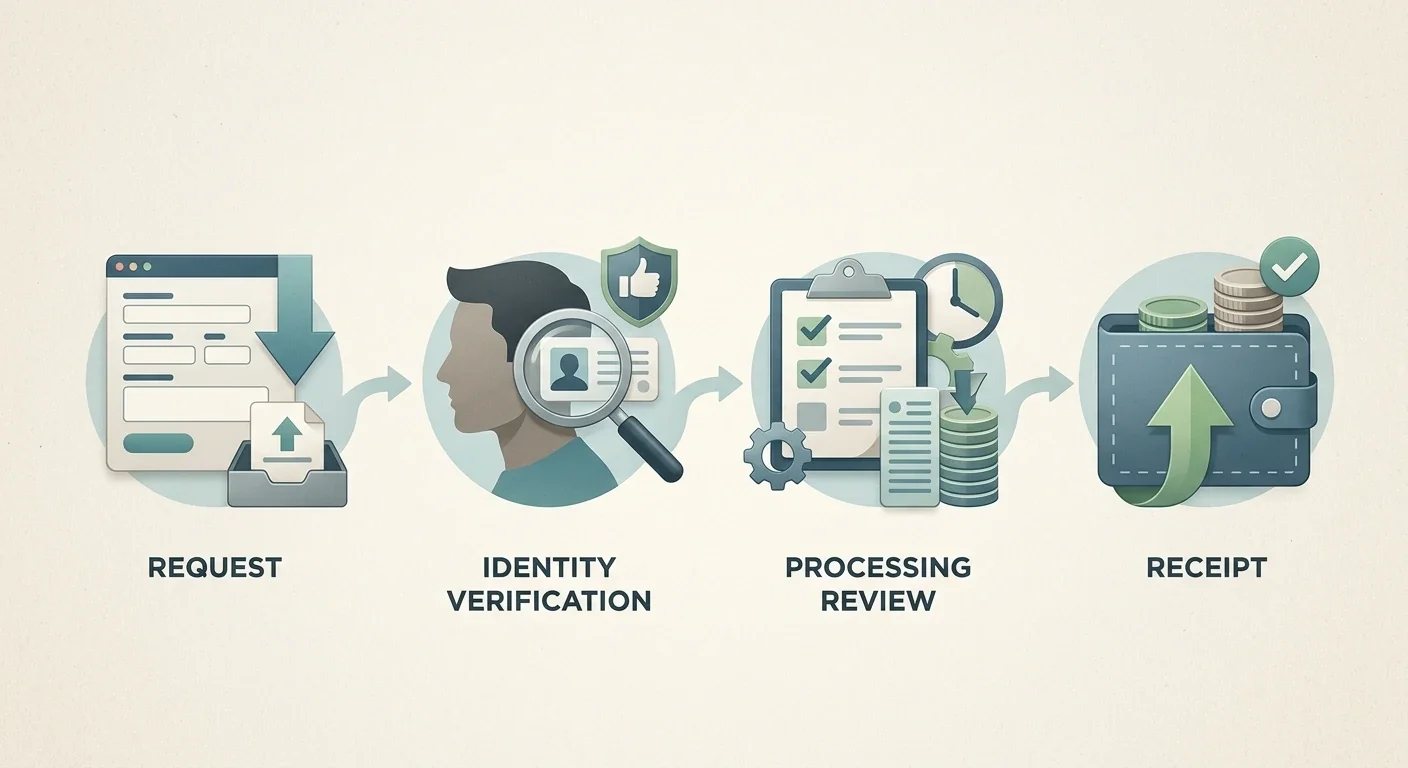
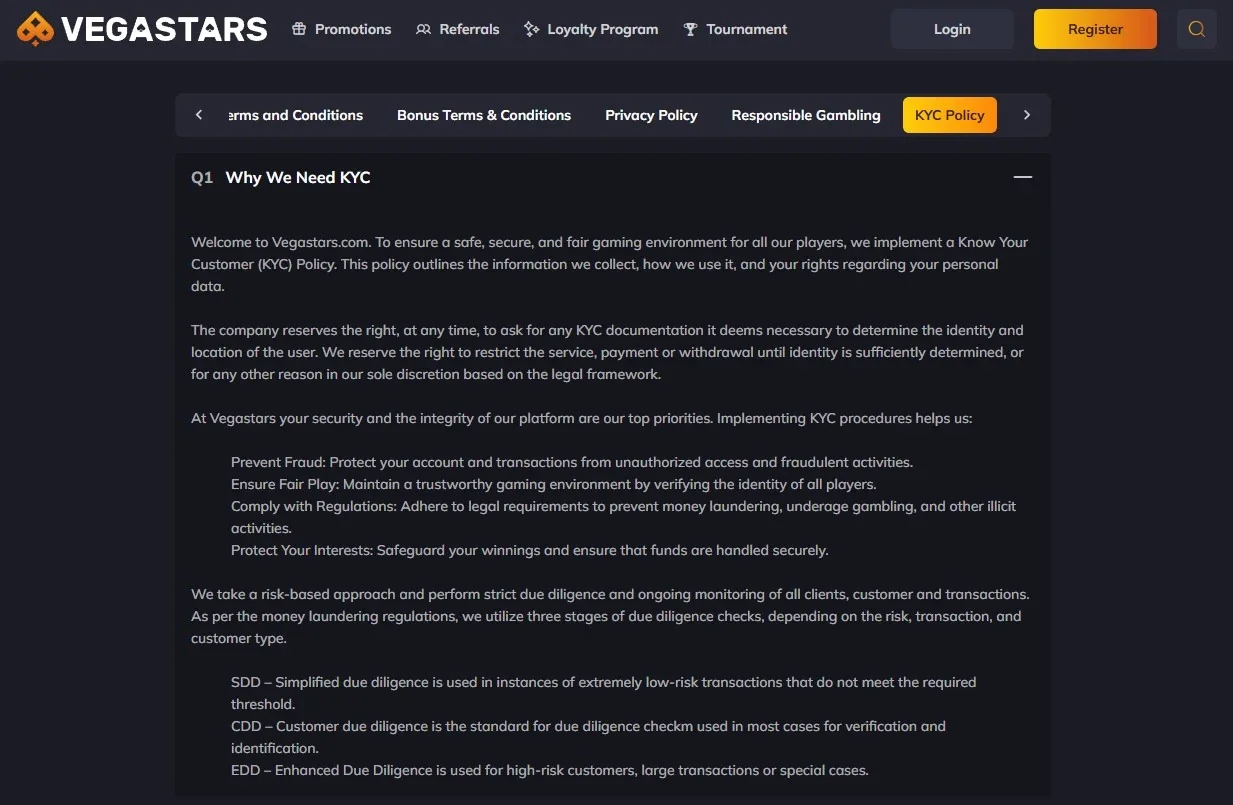
KYC and account verification often appear in casino complaints because the withdrawal stage is when identity checks become most visible. A complaint saying “they suddenly asked for documents” does not by itself show that the request was improper. Casinos commonly require identity verification, and Vegastars terms allow verification in connection with withdrawals. Exact document lists and processing times are not fixed for every account.
When reading a KYC complaint, look for whether the reviewer says the requested documents changed, whether the same document was rejected repeatedly, whether a reason was given and whether the operator response identifies a specific unresolved requirement. These details are more useful than the reviewer’s emotional label alone.
The dedicated verification guide explains how account checks can affect withdrawals and why the live request matters. If a review supplies an exact KYC timeline, treat it as that user’s case unless the current policy states the same timeline.
Support communication: availability is not quality
Vegastars advertises live chat and email support around the clock. That tells you channels are offered. Reviews address a different question: how well those channels perform when a real problem occurs. Recent feedback includes praise for quick responses as well as complaints about repetitive answers or difficulty getting a clear withdrawal explanation.
Those experiences can coexist. First-line chat may be quick for simple questions while finance or verification issues take longer and move outside the chat team’s authority. A reviewer can therefore have a fast initial response and still be dissatisfied with final resolution. When comparing feedback, separate response speed from resolution speed and separate courtesy from the substance of the answer.
An operator reply is most useful when it adds a concrete next step, explains the type of check being performed or acknowledges a specific transaction status. A generic invitation to contact support adds less information. It does not show by itself that the complaint was resolved.
Bonus complaints: check whether the dispute is about the rule or the result
Bonus reviews often mix several issues: not receiving an expected offer, losing bonus funds after a withdrawal request, being unable to cash out before wagering is complete, or simply losing while playing with promotional money. These are not equivalent complaints.
The strongest bonus complaint identifies the promotion, activation date, deposit stage and the exact rule the reviewer believes was applied incorrectly. A complaint that only says a bonus was “bad” or that play produced poor returns does not establish a policy failure. Random game outcomes should not be confused with whether bonus terms were disclosed or applied correctly.
The welcome bonus guide covers the three-deposit structure and explains which exact terms must be checked live. Anecdotal wagering claims should not replace current official promotion terms.
Game and mobile experience reviews
Reviews about loading speed, crashes or interface quality can be useful because they capture real device experiences. They also age quickly. A browser update, network route, game-provider release or site deployment can change performance without altering the casino’s underlying game catalogue.
A recent Australian Trustpilot review praised fast game loading. Treat that as a positive user signal, not a laboratory result. If performance matters, test navigation and a small number of games on the same device and network you intend to use before making a larger deposit. The goal is to verify your own usability conditions rather than extrapolate from someone else’s handset or connection.
Likewise, one crash complaint cannot prove a platform-wide defect. Repetition across recent reviews is more meaningful, especially if users identify the same device, browser or game. Even then, repeated reports show a pattern, not the technical cause of the problem.
How to grade a casino complaint
- Check recency. A review from the current month carries more weight for present operations than a review from several years ago.
- Check geography. Australian feedback can be more relevant to AUD payments, local banking routes and access conditions than feedback from another country.
- Check specificity. Dates, payment method, transaction status and named support steps are more informative than broad accusations.
- Separate observation from inference. “My withdrawal was pending for ten days” is an observation. “The casino never pays” is an inference that one case cannot prove.
- Read the operator response. It can add context, but remember that it is the company’s account of the dispute.
- Compare with the current policy. If a reviewer cites a fee, limit, KYC deadline or wagering rule, check it against current official terms before treating it as fact.
- Look for the final outcome. A follow-up confirming payment or explaining the final outcome adds more value than an unresolved first post.
This method makes reviews useful without turning reputation platforms into substitute terms pages.
What a star rating can and cannot tell you
A platform-wide score compresses different experiences into one number. It can help indicate whether sentiment is broadly positive, mixed or negative at a particular moment, but it cannot explain the cause and can change as new reviews arrive.
More importantly, a rating is not proof of regulatory status, solvency, payout policy or game fairness. Those questions need different information. Australian legal status belongs on the Australian legal status page. Operator and licence background belongs on the trust and licensing page. Review sentiment is one layer in that broader assessment.
A practical way to use reviews before depositing
- Read several recent positive and negative reviews rather than only the top or bottom rating.
- Give extra weight to detailed Australian cases when your concern is local payment or access behaviour.
- Write down the recurring issue you care about, such as withdrawal rejection, KYC communication or mobile loading.
- Check the casino’s live terms or cashier for the corresponding policy before depositing.
- Do not treat a user’s payout time as the standard time for your payment method.
- Do not treat an operator reply as independent proof that a dispute was resolved.
- Do not use review sentiment as a substitute for ACMA records or licensing information.
For a high-friction topic such as withdrawals, the best pre-deposit question is not “are the reviews good?” It is “what exact failure modes keep appearing, and what policy would govern them?” That turns anecdotal feedback into a practical risk checklist.
Putting Vegastars player reviews in perspective
Current Vegastars reviews provide a genuinely mixed reputation signal. Recent Australian feedback includes a positive account of quick withdrawal and responsive VIP contact, a negative account of bounced withdrawal attempts and unclear communication, and a positive comment on game-loading speed. None of those individual experiences should be promoted into a universal fact.
The strongest use of review data is diagnostic. It tells you which topics deserve checking before money is committed: withdrawal routing, verification communication, support escalation, bonus conditions and device performance. For the underlying rules, use the relevant policy pages and current terms. For the Australian regulatory position, rely on ACMA and the Interactive Gambling Act rather than review sentiment. That comparison is more useful than deciding that a casino is trustworthy or a scam from a star score alone.
Written by the editors at Vegastars Casino.